
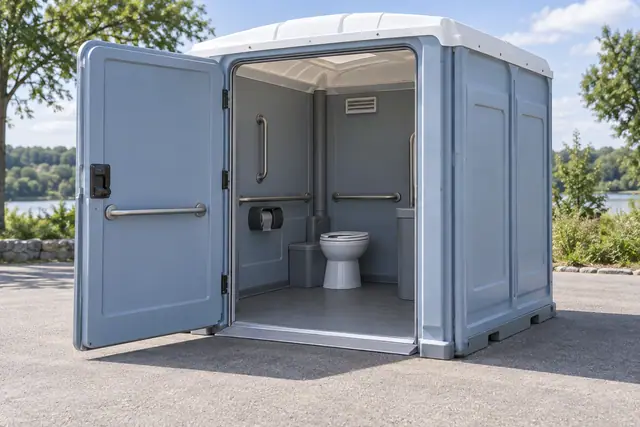
Know what the product description does—and does not—say
A standard cabin, a larger cabin and a model represented for accessible use are different descriptions. A larger exterior does not explain the entrance operation, internal usable space or support features. Likewise, a premium finish does not establish accessible use. Ask which actual model is proposed rather than accepting a general picture of a product range.
Describe practical requirements relevant to the expected users, such as mobility aids, assistance, transfer needs or operating controls. You do not need to collect diagnoses to start that discussion. The organiser or appropriate site professional should identify applicable requirements; this page does not certify a model or venue.
Turn a missing answer into a specific next question
Suppose the offer identifies a wider unit but does not explain the doorway or internal arrangement. That is not a reason to guess. Request the relevant model information and ask how it addresses the requirement under discussion. Keep the unanswered item separate from features that have actually been confirmed.
There are different ways an enquiry can proceed: the missing information may confirm the proposal, another suitable model may be needed, or the site arrangement may need review. The important step is to resolve the particular question. Ordering something called an upgrade does not settle an unknown access feature, and an improvised ramp is not a substitute for an assessed arrangement.
Check the selected model in the proposed position
Once the model information is available, examine how the equipment would work where it is intended to stand. Include the approach from the activity, stable support, changes in level, door movement and the usable space around the entrance. A product that addresses a need in isolation may still be unsuitable at a particular position.
Check washing as its own function. Confirm whether the proposed users can reach and operate it, and how water, soap, drying supplies and used water will be handled. A toilet that is usable does not make a separate washing station usable automatically. Consider a different approved position or arrangement when the property creates an unresolved obstacle.
Keep the agreed conditions intact during the rental
The accepted arrangement depends on the space and access that were assessed. Identify who will keep seating, parked vehicles, stored materials and other items out of that space, and who receives a report if the route or equipment becomes unusable. Do not move a delivered unit or alter the approach without the responsible parties reviewing the change.
Agree the rental period, expected use, cleaning, tank servicing and replenishment with the provider. Include access for delivery, care and eventual collection. The quotation should identify the specified equipment and responsibilities, not merely the word accessible. A later change in users or layout may reopen a question that had previously been answered.
Questions before you book
Is a picture enough to choose an accessible unit?
No. Ask for the actual model information relevant to its entrance, usable interior and features, then assess that equipment at the proposed position.
What should I do when a quoted feature has not been explained?
Ask the provider to resolve that specific item before relying on it. It may require more information, a different model or a change to the proposed site arrangement.
Does the toilet choice also settle handwashing?
No. The washing equipment, its approach and controls, supplies and servicing need their own usable arrangement.
Can the equipment remain accepted after the layout changes?
Do not assume so. Report the changed condition and have the relevant parties check whether the model, position, approach and washing arrangement still work.