
Distinguish the event route from the places people occupy
Oxford’s event-permit information addresses activities involving public parks, streets, sidewalks and trails, with approval, route and staging considerations. Separate venue reservations may also be needed. Confirm the current applicable process for the actual activity; the public-space guidance is not a rule for every private property rental.
On the working plan, mark where staff assemble, participants wait and visitors remain, rather than drawing only the travel line. Identify who controls each location. A route approval and a reservation for a particular venue answer different questions, neither of which alone confirms every restroom position.
Allocate facilities to the use at each stop
For each occupied area, note the people, their likely period of use and the permanent bathrooms they are authorised to enter. Check opening hours at the start and finish as well as during the main event. An existing building beside the route should not be counted unless its facilities are genuinely available.
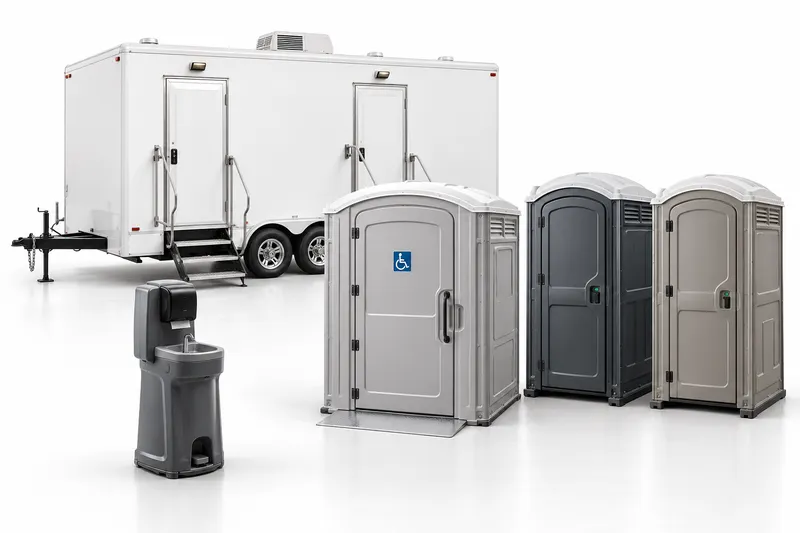
Discuss a mix of standard toilets, accessible equipment and separate handwashing where those functions are needed. Standard cabins retain waste for servicing and do not automatically include a basin. Equipment distribution should follow actual use and practical access rather than equal spacing on a route map.
Review every delivery point as its own position
Give the supplier a clear location, receiving contact and permitted vehicle route for each proposed group of equipment. Oxford’s public-event planning distinguishes route use and restricted vehicle access; permission for participants to use a trail is not permission for a service vehicle to follow it.
At each position, check standing conditions, doors, pedestrian approach, washing and queue space. Accessible equipment needs a usable route to the activity it serves. Resolve conflicts with staging, barricades and other suppliers before arrival instead of asking delivery staff to interpret an ambiguous map marker.
Coordinate care and removal across all locations
Use one clear event contact to coordinate the order while keeping local access contacts where needed. Record which facilities require cleaning, tank service, paper or washing replenishment and when the provider can reach each area. The event organiser’s checks do not imply that a service attendant is included at every stop.
Ask the quotation to identify the equipment and use window at each location, together with transport, care and collection. The finish-area pickup may need different timing from a staging-area pickup. Keep authorised access until each group is removed, including any separately permitted post-event window.
Questions before you book
Is one event address enough for several restroom locations?
No. Describe each proposed position, use period, property contact and permitted vehicle approach so the supplier can review the actual arrangement.
Can equipment be distributed evenly along the route?
Not just for visual symmetry. Place it around the people who will remain at each area, usable existing facilities and approved, serviceable positions.
Can a delivery vehicle follow the participant trail?
Do not assume that. Confirm the vehicle route and restrictions separately from event or pedestrian route permission.
Should every group be collected at the same time?
Only if that fits the actual users and permitted access. Staging, activity and finish areas may have different approved occupation windows.